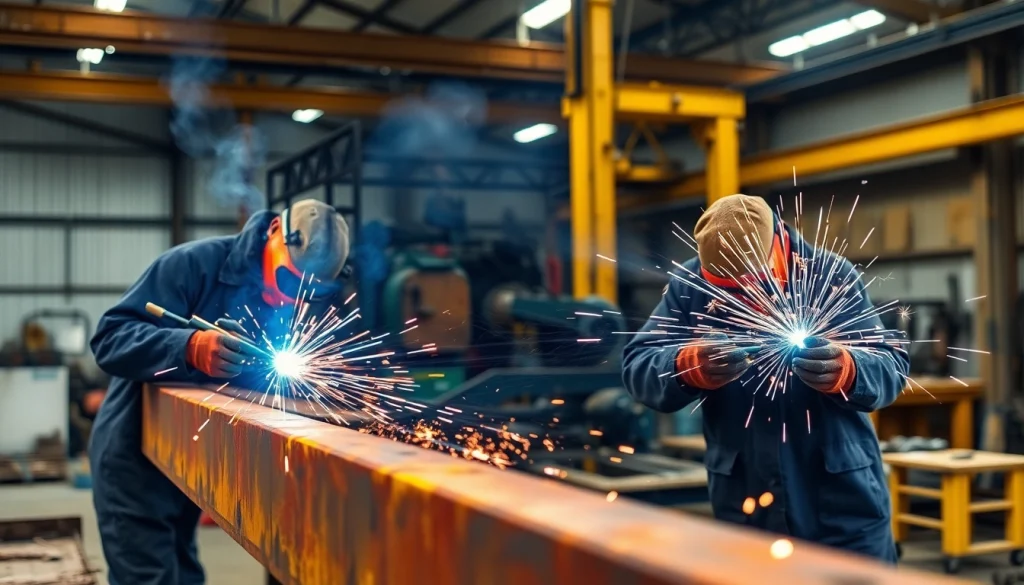
An Overview of Structural Steel Welding
Definition of Structural Steel Welding
Structural steel welding is a critical process within the construction and manufacturing sectors that involves joining steel components to form robust structures. This method is vital for creating frameworks for buildings, bridges, and various infrastructures where integrity and stability are paramount. Through precise techniques, structural steel welding ensures that the joined metal components can withstand various stressors including compression, tension, and shear forces.
Importance in Construction and Engineering
Welding is indispensable in today’s construction practices. Without structural steel welding, many architectural masterpieces would simply not exist. The ability to securely join high-strength steel elements enables builders and architects to innovate with daring designs while adhering to safety standards. Moreover, as more projects demand designs utilizing larger spans and lighter structures, the role of structural steel welding becomes increasingly crucial in fulfilling these requirements.
Common Types of Structural Steel Welding
There are several welding methods commonly used in joining structural steel, including:
- MIG Welding (Gas Metal Arc Welding): Characterized by its efficiency and versatility, this method utilizes a continuous wire feed as an electrode, making it suitable for various thicknesses.
- TIG Welding (Gas Tungsten Arc Welding): Though slower compared to MIG, TIG welding provides exceptional control, making it ideal for high-quality welds on thinner materials.
- Stick Welding (Shielded Metal Arc Welding): This technique utilizes a consumable electrode coated in flux, which provides both the weld metal and the shielding gas, making it suitable for outdoor conditions.
Key Techniques for Structural Steel Welding
MIG Welding for Structural Steel Applications
MIG welding is favored for its speed and adaptability. Utilizing a feed system for a continuous length of welding wire allows welders to make quicker, longer runs, which are particularly advantageous when constructing large steel frameworks. This technique also accommodates a broad range of materials and thicknesses, ensuring flexibility in various applications.
When employing MIG welding in structural steel, it is essential to select the appropriate wire diameter and shielding gas mixture to match the specific requirements of the project. Maintaining a suitable travel speed and angle is crucial to ensure the weld bead’s quality and integrity.
TIG Welding: Precision and Control in Steel Welding
TIG welding is renowned for producing high-quality, precise welds. This method uses a non-consumable tungsten electrode to produce the weld and is often accompanied by a filler material that is added manually. This technique is particularly effective for thin materials and situations requiring minimal distortion and a clean appearance.
In structural steel applications, TIG welding might be less efficient for heavy tasks but shines in specialty work that demands a high degree of control and finesse. For example, it can be used effectively in situations where aesthetic appearance is critical, such as in architectural metalwork.
Stick Welding: Pros and Cons
Stick welding remains one of the most widely used methods for structural steel welding due to its simplicity and efficacy. The process involves an electrode coated with flux, which provides a shielding gas and assists in purging contaminants from the weld area. This method is particularly useful in outdoor settings where wind can disrupt the protective gas shield.
Despite its benefits, stick welding does have limitations. The process can be slower than MIG or TIG welding, and there may be challenges associated with managing the quality of the weld and providing adequate penetration. Nevertheless, for professionals experienced in this technique, it remains a reliable method for many structural applications.
Benefits of Structural Steel Welding
Durability and Strength of Welded Structures
The primary advantage of structural steel welding is the increased strength and durability it lends to construction projects. Well-executed welds can withstand significant loads, making welded connections stronger than mechanical fasteners like bolts or rivets. This enhanced strength is critical in scenarios where infrastructure is subjected to high stress, including seismic activity or heavy loads.
Efficiency in Construction Processes
Welding not only strengthens constructions but also streamlines processes. Once steel components are prepared for welding, the speed of joining is typically faster than traditional assembly methods. By reducing the number of parts needed and minimizing the requirement for mechanical connections, welding can lead to expedited project timelines and lower labor costs.
Cost-Effective Solutions for Builders
While the initial setup for welding may be higher, it can ultimately provide significant savings when conducted accurately. The reduction in materials needed—due to the improved strength of welded connections—can lower costs, particularly in large-scale projects. Additionally, welding’s ability to reduce construction time can lead to lower overall project expenses.
Challenges in Structural Steel Welding
Common Issues Faced by Welders
Welders must navigate several challenges, including distortion, heat-affected zones, and inadequate fusion or penetration. Each of these issues can compromise the integrity of the welding process and the overall stability of the structure. Proper training, meticulous preparation, and the use of appropriate techniques and equipment are essential to mitigate these risks.
Regulatory Compliance and Safety Standards
Structural steel welding is subject to stringent codes and regulations to ensure safety and quality. Welding professionals must stay updated on the latest industry standards, such as those set by the American Welding Society (AWS) and other regulatory bodies. Compliance with these standards not only ensures quality but also protects the safety of workers and users of the infrastructure.
Addressing Quality Control in Welded Structures
Consistent quality control methods are vital in ensuring that welded structures meet the necessary strength and safety criteria. This often involves inspections, testing of weld properties, and adherence to pre-defined quality benchmarks. Utilizing non-destructive testing methods such as ultrasonic or radiographic inspection can help identify potential flaws without damaging the structures.
The Future of Structural Steel Welding
Advancements in Welding Technology
The welding industry is undergoing significant transformations through the adoption of new technologies. Innovations like robotic welding, which utilizes automated systems to perform precise and repetitive welding tasks, are on the rise. These advancements enhance efficiency and ensure a higher level of consistency in weld quality.
Additionally, developments in welding equipment, such as more refined control systems and advanced protective technologies, are improving welders’ capabilities and the overall welding process.
Trends in Structural Welding Applications
As the construction industry moves towards sustainability, structural steel welding is evolving to support more eco-friendly practices. The use of recycled materials and processes that minimize waste are gaining popularity. Additionally, the demand for durable and efficient structures is leading to increased use of advanced steel grades that require specialized welding techniques.
Another emerging trend is in the realm of digitalization, where data collection and analysis between welding processes are becoming essential. This allows for better monitoring and ensures that every aspect of the weld meets stringent standards.
Training and Certification for Welders
As the technologies and techniques in structural steel welding evolve, there is an increasing need for proper training and certification programs. These programs equip welders with the latest skills and knowledge required to perform effectively in a changing environment. Institutions are focusing on integrating both theoretical knowledge and practical application, ensuring that the welders of tomorrow are prepared for the challenges of the industry.
Overall, education and training in structural steel welding are critical for maintaining high standards in construction integrity and safety. By fostering a highly skilled workforce, the industry can continue to innovate and adapt in response to emerging trends and technological advancements.