
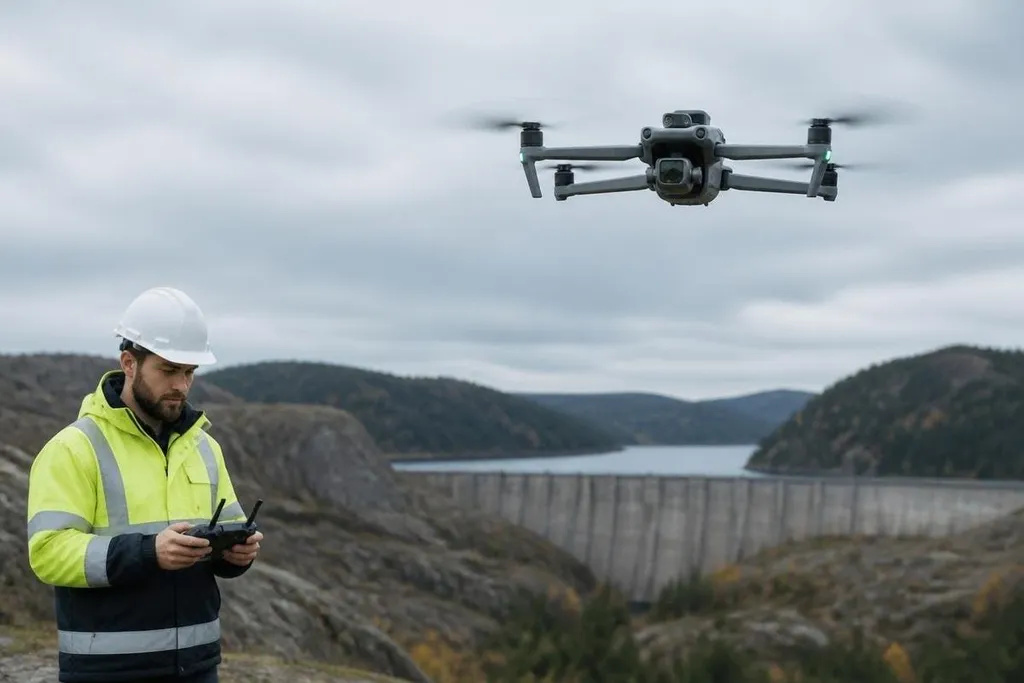
A drone can now use cameras, GPS, onboard computers, and flight software to make more decisions without a pilot guiding every move. The hard question is what happens when the signal drops, the weather changes, or the scene looks different from the training data.
Quick read
- Autonomy depends on sensors, software, and a safe way to hand control back to a pilot.
- A short demo can show motion, but it may not show repeatable work across many flights.
- Buyers should ask what the drone does alone, what needs approval, and what remains unproven.
What intelligent drones actually do
An autonomous drone reads its surroundings through sensors, compares that information with a planned route, and adjusts its flight. A camera can help identify objects, while GPS gives the aircraft a position outdoors. LiDAR sends light pulses to measure nearby surfaces and build a view of the area.
That process needs onboard computing. The drone must read sensor data, decide what to do, and send commands to its motors quickly enough to stay in flight. A remote server can handle heavier work, but a weak or lost connection then becomes a flight problem.
Autonomy also has levels. One drone may hold its position without pilot input. Another may follow a planned route and avoid obstacles. A more advanced system may inspect a site, flag a change, and ask a person to confirm the next action.
Those tasks should not be grouped under one broad label.
The handoff matters as much as the flight
The aircraft still needs a clear link between its software and its operator. The pilot may set the route, approve a landing, or take control when the system sees something it cannot classify.
That handoff must work under pressure. The control screen needs to show the drone's position, battery state, route, and warning status without hiding the manual controls. A safety process also needs a defined response for lost GPS, low battery, blocked paths, and signal loss.
A clean flight path can hide the work needed to keep an intelligent drone safe. A video may show the drone crossing a marked area while leaving out failed runs, operator input, or the conditions that ended the flight. Read a report on Robot24.com beside the maker’s video, then check the test site, date, operator role, and flight conditions before treating the result as proof.
Where the system can fail
Outdoor flight changes from one site to another. Bright sun can affect cameras. Trees, buildings, and metal structures can affect GPS signals. Dust, rain, and smoke can make a sensor return poor data.
Software can also make the wrong call when an object looks unlike the examples used during training. One that works well over a clear field may need a different plan near power lines, moving vehicles, or people. The safe response may be a slow hover, a return route, or a request for human control.
Data handling adds another concern. Inspection drones can record images of private land, workers, or nearby buildings. Buyers need to know where that data is stored, who can view it, and how long the company keeps it. Those details affect the job as much as flight time does.
What to ask before buying
Use this checklist when a supplier presents an autonomous drone system:
- Name the task: Ask for the exact job the drone completes without pilot input.
- Check the conditions: Ask which light, weather, terrain, and signal limits apply.
- Watch the handoff: See how a pilot takes control and how long that change takes.
- Ask for failed cases: Request examples of blocked routes, lost signals, and sensor errors.
- Check the data path: Find out where images and flight records go after each mission.
- Price the people: Include training, supervision, repairs, software fees, and site setup.
The answers should describe a repeatable work process, not a list of features. A supplier that cannot state the limits clearly has not given you enough to price the system.
What comes next
The useful measure for intelligent drones will be the number of safe missions they complete with limited human input, across the places where buyers plan to fly them. Until suppliers publish that record and show how pilots handle failures, I'd treat autonomy as a capability to test, not a reason to sign a large order.